


Snoring Mouthguards
A Mandibular Advancement Splint (MAS), like the Hushd Pro Avera, works by gently moving your lower jaw forward during sleep. This forward positioning helps prevent the tongue and soft tissues from collapsing backward and blocking your airway. When the airway stays open, breathing becomes smoother and more consistent throughout the night. This reduces snoring, improves oxygen levels, and allows for deeper, more restorative sleep. The MAS is adjustable, allowing gradual fine tuning of the jaw position to achieve the most effective and comfortable position for your jaw and airway.
CPAP, or Continuous Positive Airway Pressure, uses a machine and mask to push air into your airway, keeping it open. In contrast, a mandibular advancement splint like the Hushd Pro Avera works by gently repositioning your jaw to keep your airway open throughout the night. CPAP is often recommended for moderate to severe sleep apnea, while MAS is commonly used for mild to moderate cases or when CPAP is not tolerated. For patients with mild to moderate obstructive sleep apnea, the efficacy of MAS devices is comparable to CPAP.1 Many people prefer MAS because it is quiet, portable, and does not require a power source. While CPAP can be more powerful, MAS often has higher long-term adherence because it is simpler and more comfortable.2
The Hushd Pro Avera Mandibular Advancement Splint is best suited for people with simple snoring or mild to moderate obstructive sleep apnea. It is also a great option for those who struggle with CPAP or prefer a simpler, more comfortable solution. Patients with mild to moderate obstructive sleep apnea with symptoms (tiredness, headache) other than just simple snoring should consider CPAP. If you already use CPAP and need a more portable, discreet option for travel, a mandibular advancement splint can be a practical alternative when you’re away. Ideal candidates for MAS generally have healthy teeth and gums, as the device relies on dental support. A sleep study and dental assessment are typically recommended to confirm suitability.
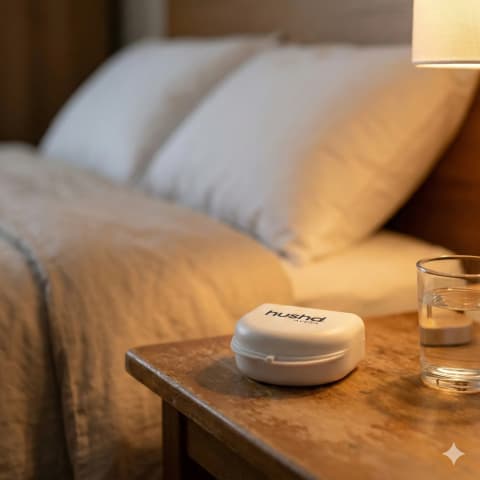
The Hushd Pro Avera Mandibular Advancement Splint is a custom-fitted oral device designed to treat snoring and obstructive sleep apnoea. It works by gently positioning your lower jaw forward during sleep to keep your airway open.
Unlike bulky machines, it’s small, quiet, and worn like a mouthguard. 3D printed from medical-grade nylon, it’s built for durability and comfort. Its personalised fit ensures it stays secure - making it a reliable, long-term solution for better sleep and quieter nights.1
Yes, Mandibular Advancement Splints like the Hushd Pro Avera are backed by clinical research. Studies show significant reductions in snoring and improvements in sleep quality, oxygen levels, and daytime alertness.1 Many patients experience meaningful relief from symptoms, especially in mild to moderate cases of obstructive sleep apnea. For patients with mild to moderate obstructive sleep apnea, the efficacy of MAS devices is comparable to CPAP.2 While CPAP may be more powerful in severe cases, MAS devices often achieve comparable real world results due to higher comfort and consistent use.1 With proper fitting and follow up, an MAS can be a highly effective long term solution for improving sleep health.
The Hushd Pro Avera Mandibular Advancement Splint is designed to treat snoring and cases of mild to moderate obstructive sleep apnea. Obstructive sleep apnea occurs when the airway becomes blocked during sleep, leading to repeated breathing interruptions. This can cause poor sleep quality, daytime fatigue, headaches, and increased risk of serious conditions such as stroke, diabetes and hypertension. By keeping the airway open, the MAS helps restore normal breathing patterns throughout the night. It is particularly effective for mild to moderate obstructive sleep apnea and simple snoring, helping you wake up feeling more refreshed and energised.
The Hushd Pro Avera Mandibular Advancement Splint may not be suitable for everyone. People with severe sleep apnea may require CPAP as a first line treatment. People with mild to moderate sleep apnea with symptoms other than simple snoring should consider CPAP. It may also not be appropriate for individuals with significant jaw pain, temporomandibular joint disorders, weak or missing teeth, or poor dental health. Because the device relies on your teeth and jaw structure, a dental assessment is recommended before fitting. If you have complex medical or dental conditions, a sleep specialist or dentist can help determine the safest and most effective treatment for you.
Yes, MAS devices can be a great option even if you only snore without sleep apnea. A MAS works by increasing the dimensions of the upper airway, which addresses the narrowing that causes snoring in the first place. Research shows MAS devices can offer a simple and effective treatment for snoring in suitable patients and are easy to use.
Most people find the Hushd Pro Avera Mandibular Advancement Splint comfortable after a short adjustment period, typically within 3 to 7 nights. Because it is custom fitted to your exact dental profile, it sits securely without bulky material. Unlike CPAP masks, there are no straps, pressure, or noise. You can close your lips naturally and even sip water if needed. Some users may feel mild jaw tension initially, but this usually settles as your body adapts.
While a prescription is not required to obtain a mandibular advancement splint, it is strongly recommended that you undergo a sleep study and consult with a Respiratory & Sleep specialist or dentist to confirm suitability.
The Hushd Pro Avera Mandibular Advancement Splint is designed for durability and long-term use. It is 3D printed from medical-grade nylon, offering greater strength than standard materials and the resilience to withstand nightly wear.
Backed by a three-year warranty, the device may last even longer with proper care. Daily cleaning with the provided solution helps maintain performance and hygiene. As a custom-fitted device, it is designed to retain its fit and effectiveness over time, making it a valuable investment in long-term sleep health.
Week 1: Mild jaw or tooth tenderness in the morning is normal. Most patients adjust within 7–10 days. Snoring typically stops on night one.
Weeks 2–4: Fine-tune the advancement (how far forward your jaw is held). Most devices let you adjust in small increments - more advancement means better airway opening, but also more jaw work.
After 30 days: A follow-up appointment with a consultant either in-person or via telehealth to check in on your progress and comfort.
Long term: Daily cleaning, occasional dental check-ins to make sure your bite hasn't shifted, and replacement every 2–5 years.
Getting started is quick and straightforward — here's what to expect:
Initial appointment (approx. 20 mins): We take a precise 3D digital scan of your mouth — no messy impressions, just a fast and comfortable process.
Custom fabrication: Your scans are sent to our specialist manufacturer, where your appliance is custom-made to fit your mouth exactly.
Fitting appointment (within ~4 weeks): You'll return to the clinic to have your new appliance fitted and checked for comfort.
One-week check-in: A follow-up to make sure everything feels right and address any early concerns. Appointment available in-person or via telehealth.
One-month review: An additional check-in to confirm the appliance is working well and make any fine-tuning adjustments. Appointment available in-person or via telehealth.
Most patients find the whole process easy and well worth it for a better night's sleep - for themselves and their partner!
Medicare does not cover the cost of Mandibular Advancement Splints. However, if you hold private health insurance with extras cover, you may be able to claim a rebate - the amount will depend on your individual policy and fund. We recommend checking with your insurer beforehand to find out what you're entitled to. Our team is also happy to provide you with the necessary documentation to support your claim.