
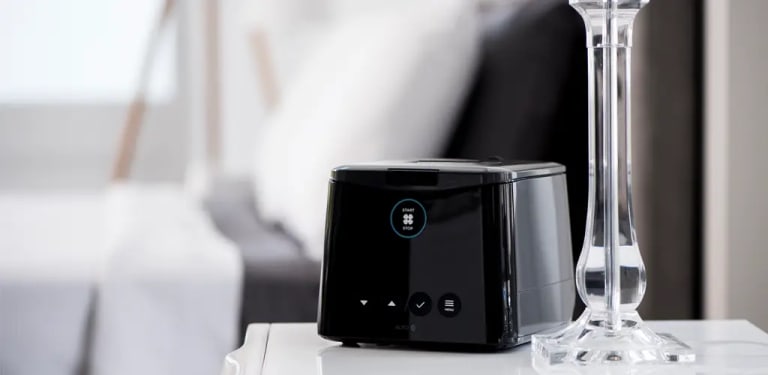
Automatic CPAP Machines
Experience the comfort and precision of an Auto CPAP machine, built to provide tailored pressure support all night long. Browse leading brands such as ResMed, Philips, and Fisher & Paykel.


Automatic CPAP Machines
 Add any mask for $100

 $50 off with "BETTERSLEEP50"
 Add any mask for $100


 $50 off with "BETTERSLEEP50"

 $50 off with "BETTERSLEEP50"

An Automatic CPAP machine, also known as an Auto CPAP or APAP (Automatic Positive Airway Pressure), is a smart sleep therapy device that adapts to your breathing patterns in real time. Unlike standard CPAP machines that deliver a single fixed pressure all night, an Auto CPAP machine continuously monitors your airflow and adjusts pressure up or down based on what your airway needs at any given moment. An Auto CPAP machine ensures you receive effective therapy while remaining as comfortable as possible throughout the night.
The real advantage of an Auto CPAP machine lies in its ability to respond intelligently to the natural changes that occur during sleep. If your airway begins to narrow as you enter deeper sleep, roll onto your back, or experience nasal congestion, the Auto CPAP machine gently increases pressure to prevent an apnea event from occurring. Once your airway stabilises, an Auto CPAP machine eases the pressure back down to a more comfortable level.
This intelligent, adaptive approach makes an Auto CPAP machine feel far more natural and less intrusive than fixed-pressure alternatives, making it a particularly strong choice for those new to CPAP therapy or anyone whose pressure requirements change often throughout the night.
While both devices treat obstructive sleep apnea by delivering pressurised air to keep the airway open, the way they do so differs significantly. Understanding these differences can help you determine whether an Auto CPAP machine is best suited to your needs.
Pressure Delivery A standard CPAP machine operates at a single, fixed pressure level determined during a sleep study. This pressure remains constant throughout the entire night, regardless of changes in your breathing. The limitation here is that your breathing needs are rarely static. Shifting positions, moving between sleep stages, or experiencing congestion can all affect how much pressure your airway requires at any given time. An Auto CPAP machine addresses this by continuously evaluating your airflow and adjusting pressure within a prescribed range, increasing the pressure when airway collapse is detected, and reducing the pressure once breathing stabilises.
Comfort and Tolerability Fixed pressure therapy can feel unnecessarily forceful during lighter sleep or when you first lie down, which may make it harder to fall asleep or stay asleep. An Auto CPAP machine keeps pressure at a lower, more comfortable level during periods of stable breathing and only increases it when genuinely needed. An Auto CPAP machine has gentler delivery which can significantly reduce common complaints such as air swallowing, excessive dryness, or the sensation of fighting against the airflow, making therapy considerably easier to tolerate.
Who Each Device Suits Best Fixed CPAP is a reliable option for people with very consistent pressure needs, such as those with stable sleep habits, steady weight, and minimal positional changes. An Auto CPAP machine is better suited to users whose requirements fluctuate throughout the night or over time. This includes people who change sleep positions frequently, experience seasonal allergies, have varying weight, or consume alcohol, which can increase airway relaxation. An Auto CPAP machine is also an excellent starting point for new CPAP users who are still establishing what pressure level works best for them.
Long-Term Flexibility Perhaps one of the most practical advantages of an Auto CPAP machine is its adaptability over time. A Fixed CPAP machine requires a clinician to manually adjust settings if your therapy needs to change, often necessitating an additional sleep study. Whereas an Auto CPAP machine automatically accommodates these changes night after night and can also be switched into fixed-pressure mode if required. This built-in flexibility means the Auto CPAP machine can evolve alongside your therapy needs, reducing the likelihood of needing repeated clinical interventions down the track.
If you are exploring treatment options for obstructive sleep apnea, an Automatic CPAP machine (also referred to as an Auto CPAP or APAP) is worth serious consideration. Offering a more responsive and personalised approach than traditional fixed-pressure devices, an Auto CPAP machine delivers a range of practical advantages that can make a meaningful difference to your comfort, consistency, and long-term treatment outcomes.
Pressure That Works With You, Not Against You
The defining feature of an Auto CPAP machine is it’s ability to monitor your breathing continuously and adjust pressure on a breath-by-breath basis. Rather than holding a single pressure level throughout the night, the Auto CPAP machine delivers only the minimum pressure required to keep your airway open at any given moment. When your breathing is stable and unobstructed, the Auto CPAP machine pressure stays low and comfortable. When the Auto CPAP machine detects signs of airway restriction, snoring, or an apnea event, it responds immediately by increasing pressure to prevent any disruption to your sleep. This dynamic approach means your therapy is always working in the background, quietly and efficiently, without delivering more pressure than you need.
A More Comfortable Night's Sleep
Comfort is one of the most common reasons people struggle with CPAP therapy, and it is also one of the strongest arguments for choosing an Auto CPAP machine. Fixed-pressure machines are set to a level that accounts for your most demanding breathing moments, meaning the pressure can feel unnecessarily forceful during lighter sleep or periods of relaxed, unobstructed breathing. An Auto CPAP machine avoids this by keeping pressure lower whenever possible, which reduces the likelihood of common complaints such as air swallowing, nasal dryness, mask leaks caused by excessive airflow, and the general sensation of fighting against the machine. For many users, this gentler experience makes therapy with an Auto CPAP machine far easier to adapt to and sustain over time.
Adapts to the Realities of Everyday Life
Your pressure needs do not remain constant from one night to the next. Sleep position, sleep stage, seasonal allergies, weight changes, alcohol consumption, illness, and even changes in altitude can all influence how much pressure your airway requires on any given night. A Fixed CPAP machine cannot account for these variations without manual intervention from a clinician, often requiring additional appointments or repeat sleep studies. An Auto CPAP machine handles these fluctuations automatically, adjusting within a clinician-prescribed range to ensure you remain protected regardless of what changes occur in your health or daily routine. The adaptability of an Auto CPAP machine makes it a particularly practical long-term solution for people whose lifestyles or health needs are likely to shift over time.
An Ideal Starting Point for New Users
For those beginning CPAP therapy without a detailed pressure titration study, an Auto CPAP machine offers a safe and effective way to establish the right pressure range under clinical guidance. Because the Auto CPAP machine self-adjusts, it removes much of the guesswork involved in finding the correct fixed pressure. Many sleep clinicians recommend starting new patients on an Auto CPAP machine for precisely this reason. The therapy data recorded by the Auto CPAP machine, including usage hours, estimated apnoea-hypopnoea index (AHI), and leak rates, can then be reviewed remotely by your clinician to confirm whether a fixed pressure setting might be appropriate down the line, or simply to ensure your therapy is performing as it should.
Supports Better Long-Term Adherence
Ultimately, the most effective CPAP therapy is the one you actually use consistently. Research consistently links greater comfort and ease of use with improved adherence, and improved adherence with meaningful reductions in daytime sleepiness and a better overall quality of life. By making therapy more tolerable night after night, an Auto CPAP machine significantly increases the likelihood that you will continue using your device regularly and for the recommended duration each night.
Reduced Need for Clinical Intervention
Because an Auto CPAP machine continuously self-adjusts within its prescribed range, many of the lifestyle and seasonal changes that would otherwise require a clinic visit or prescription update are handled automatically by the Auto CPAP machine. This not only saves time but also ensures your therapy remains effective without unnecessary interruptions to your routine.
For anyone diagnosed with obstructive sleep apnea (OSA), an Auto CPAP machine represents a flexible, intelligent, and user-friendly path to better sleep. As always, speak with your doctor, sleep physician or CPAP consultant to confirm whether an Auto CPAP machine is the right choice for your individual needs.
When a Fixed CPAP May Still Be Preferred
Auto CPAP machines have become increasingly popular thanks to their ability to adapt pressure in real time, but this does not mean they are the right choice for everyone. There are a number of specific situations where a Fixed-pressure CPAP remains the more appropriate option, and understanding these scenarios can help clarify why a sleep physician might recommend one device over the other.
When Your Pressure Needs Are Already Well Established
For people who have undergone a comprehensive in-lab sleep study or a thorough CPAP titration, the ideal therapeutic pressure may already be clearly defined. If that single pressure level has been shown to reliably control obstructive sleep apnea, there is little clinical reason to introduce the variability of an Auto CPAP machine. Fixed CPAP delivers consistent, predictable pressure from the moment you fall asleep to the moment you wake up, with no fluctuations throughout the night. Many users actually find this steadiness more comfortable and less noticeable than the subtle but continuous adjustments made by an Auto CPAP machine. For these individuals, simplicity and consistency are genuine advantages rather than limitations.
Complex or Atypical Breathing Conditions
An Auto CPAP machine is highly effective for the majority of people with straightforward obstructive sleep apnea, but it is not universally appropriate. Certain breathing disorders involve more than simple airway collapse and require more carefully controlled pressure delivery than a standard APAP algorithm can provide. Conditions such as central sleep apnea, Cheyne-Stokes respiration, treatment-emergent central apnea, hypoventilation syndromes, and some neuromuscular disorders involve disruptions to the brain's breathing regulation rather than a purely mechanical obstruction. In these cases, a Fixed CPAP, or in many instances a more specialised device such as a BiPAP or adaptive servo-ventilation (ASV) machine, may be prescribed to ensure therapy remains safe, stable, and clinically appropriate.
Clinical Monitoring and Pressure Validation
There are circumstances where a Fixed-pressure device is deliberately chosen as part of a structured, short-term treatment plan rather than as a permanent solution. A sleep physician may prescribe Fixed CPAP when they need to confirm that a specific pressure is delivering effective results, assess how consistent your respiratory events are under controlled conditions, or troubleshoot issues such as residual snoring, mask leaks, or pressure discomfort. Because the pressure remains constant, it removes one variable from the equation, making it considerably easier to interpret therapy data and identify what is and is not working. This controlled approach can streamline clinical decision-making and may eventually inform a transition to an Auto CPAP machine if deemed appropriate.
Personal Comfort and Individual Preference
Beyond clinical considerations, personal experience and preference play a meaningful role in determining which device is the right fit. Some users find the sensation of shifting pressure during sleep unsettling, even when those changes are subtle. Others simply prefer the reassurance of knowing exactly what pressure they are receiving each night and appreciate the straightforward, no-fuss nature of a fixed device. Fixed CPAP machines often feature simpler interfaces with fewer settings to navigate, which suits users who prefer a reliable, consistent experience without additional complexity.
Choosing the Right Device for You
An Auto CPAP machine offers considerable advantages for a broad range of users, but fixed CPAP continues to serve an important role in sleep apnea management. Whether it is because your pressure needs are stable and clearly defined, your condition requires tightly controlled therapy, or you simply find consistent pressure more comfortable, a fixed device remains a highly effective and clinically valid choice.
If you are unsure whether an Auto CPAP machine or Fixed pressure machine is best suited to your situation, the most important step is to consult your sleep physician or a qualified CPAP consultant. With a full picture of your sleep study results, symptoms, lifestyle, and preferences, they can guide you toward the device that will deliver the safest and most effective therapy for your individual needs.
Yes, within the range your doctor prescribes. An Auto CPAP machine is designed to automatically adjust your pressure within a clinician-set range, continuously evaluating your breathing throughout the night to determine where your pressure needs to sit.
A contemporary Auto CPAP machine uses sophisticated algorithms that detect signs of airway instability, such as snoring, flow limitation, increased respiratory effort, or partial airway collapse. When these signals appear, the machine gently increases pressure to prevent an obstruction. When your airway stabilises, it gradually reduces pressure again to keep you as comfortable as possible.
It is important to understand that finding your pressure is not a one-time event. Your optimal pressure can shift from night to night due to changes in sleep position, body weight, nasal congestion, alcohol intake, or even how fatigued you are. An Auto CPAP machine adapts to these nightly variations, which is why many patients prefer them over fixed-pressure machines.
Your Auto CPAP machine records metrics such as average pressure, peak pressure, leak levels, and residual apnoea-hypopnoea index (AHI). These insights allow your sleep physician and CPAP consultant to fine-tune your settings, including widening or narrowing the pressure range and adjusting comfort features, to optimise your therapy over time.
An Auto CPAP machine knows when to adjust pressure by constantly monitoring your breathing and responding to early signs that your airway is beginning to narrow or collapse. Rather than delivering one fixed pressure all night, an Auto CPAP machine uses sensitive flow sensors and built-in algorithms to adjust pressure breath by breath, providing just enough support to keep your airway open at any given moment.
As you sleep, the Auto CPAP machine measures how smoothly air moves in and out of your lungs. When breathing is stable and your airway is open, the Auto CPAP machine gradually lowers pressure toward the bottom of your prescribed range to maximise comfort. When the Auto CPAP machine detects changes suggesting your airway is beginning to struggle, it gently increases pressure to prevent things progressing into full obstructions or extended breathing pauses.
Flow limitations are among the earliest warning signs that the upper airway is narrowing. The Auto CPAP machine analyses the shape of your airflow curve, and when the top of that curve begins to flatten, rather than remaining smooth and rounded, it recognises that restriction is developing and nudges the pressure upward in small increments to restore a normal breathing pattern before a full blockage can occur.
Many Auto CPAP machines also incorporate microphones or vibration sensors that detect the subtle vibrations produced by snoring. Because snoring typically indicates partial airway collapse, the Auto CPAP machine treats this as a signal that more support is needed and raises pressure accordingly.
Hypopneas and apneas, representing partial and complete breathing pauses respectively, prompt a stronger pressure response. When either event is detected, the Auto CPAP machine increases pressure more assertively, always within your prescribed range, to reopen the airway and restore normal breathing before gradually reducing pressure again once airflow has stabilised. This continuous monitoring and adjustment happens automatically throughout the night, adapting to changes in sleep stage, body position, and night-to-night variation while keeping pressure as low and comfortable as possible whenever your airway is stable.
Your pressure needs can shift considerably throughout the night, and one of the key advantages of an Auto CPAP machine is its ability to respond to these changes in real time. Two of the most significant factors influencing required pressure are sleep position and sleep stage, both of which can have a meaningful impact on how your airway behaves during sleep.
Many people require higher pressure when sleeping on their back, because in this position, gravity pulls the tongue and soft tissues toward the throat, narrowing the airway and increasing the likelihood of collapse. Sleeping on your side generally reduces this gravitational effect, meaning the airway stays more open and typically requires less pressure to remain stable. People who shift positions frequently during the night may notice corresponding fluctuations in the pressure delivered by their Auto CPAP machine.
Sleep stages also play a significant role - During REM sleep, the muscles supporting the airway become considerably more relaxed, making airway collapse more likely and causing many people to experience more apneas, snoring, or flow limitations during this stage than any other. As you cycle in and out of REM throughout the night, your pressure requirements can rise and fall accordingly.
Individual anatomy and muscle tone also contribute to pressure variability. Factors such as jaw structure, neck circumference, and soft tissue thickness can influence how readily the airway narrows once the body fully relaxes during sleep, even if these differences are not noticeable while awake.
Because an Auto CPAP machine continuously monitors your breathing, it can respond instantly to any of these changes, whether you roll onto your back, enter deep REM sleep, or experience temporary airway narrowing. This real-time adaptability is one of the primary reasons an Auto CPAP machine feels more natural and consistent, delivering effective treatment even as your breathing patterns shift throughout the night.
Before therapy begins, your doctor or CPAP consultant will program a minimum and maximum pressure range based on your sleep study results, symptom severity, and relevant clinical considerations, such as how your apneas behaved across different sleep stages or body positions. These settings act as the boundaries for your Auto CPAP machine, and the device will always remain within this range regardless of how your breathing changes throughout the night.
Within those boundaries, the Auto CPAP machine functions like a highly intelligent Autopilot, analysing your breathing in real time and delivering exactly the pressure required at each moment, never more than necessary and never less than what is needed to keep your airway stable.
A well-set pressure range typically feels comfortable, natural, and supportive. Most users can tell their range is appropriate when breathing feels unobstructed, sleep quality improves, and daytime symptoms such as fatigue, headaches, or morning grogginess begin to resolve. If the Auto CPAP machine frequently reaches either its minimum or maximum limit, however, this may indicate the range needs adjustment. An Auto CPAP machine consistently hitting its upper limit may require a slightly higher maximum, while one that sits at the minimum for extended periods while still detecting events may need the lower boundary raised.
Your clinician can review nightly data from your Auto CPAP machine including pressure graphs, AHI, leak rates, and flow limitation patterns to assess whether the machine is working efficiently or whether adjustments would improve comfort and effectiveness. A correctly calibrated pressure range is especially important for those whose needs vary significantly, such as people who alternate between back and side sleeping, individuals whose apnea worsens during REM, or users affected by congestion, allergies, alcohol, or weight changes. Ultimately, your range is considered correct when you are sleeping comfortably, your AHI is well controlled, the Auto CPAP machine is not consistently hitting its pressure limits, and you are feeling the benefits of treatment during the day.
The AirSense 11 is the newer generation, and it's noticeably more compact and lightweight than the AirSense 10, around 24% smaller and 10% lighter. It also has a sleeker touchscreen interface and improved 4G cellular connectivity for remote monitoring and over-the-air updates. Functionally, the AirSense 11 AutoSet combines both the standard AutoSet and AutoSet for Her algorithms into one device, where previously these required two separate AirSense 10 units. Both ranges include Elite (fixed pressure) and AutoSet (automatic) models with integrated humidifiers.
We ship to Australia, Brazil, Canada, Fiji, Malaysia, New Zealand, Singapore, and USA.
Yes, this is completely normal and is actually a sign that the Auto CPAP machine is working exactly as intended. An Auto CPAP machine continuously monitors your breathing and adjust pressure in real time, and because your breathing patterns naturally change from night to night, the machine's behaviour will change along with them.
One of the most common reasons therapy may feel different is sleep position. When you sleep on your back, gravity draws the soft tissues of the throat backward, narrowing the airway and making collapse more likely. When sleeping on your side, airway collapse is less common, and you may notice the pressure remains lower and therapy feels gentler overall.
Sleep stage also influences how the machine behaves. During REM sleep, the throat and airway-supporting muscles become significantly more relaxed, and many people experience their most frequent apnoea events during this stage. The machine may raise pressure during REM and reduce it again as you return to lighter sleep.
Temporary factors such as nasal congestion from allergies, colds, or dry air can alter the way you breathe and prompt the machine to increase pressure to compensate. Even minor fluctuations in body weight can affect how readily your airway collapses, and the machine may respond with varying pressure levels as a result.
Lifestyle factors also contribute. Alcohol and sedative medications relax the throat muscles, increasing the likelihood of obstruction and requiring higher pressure. Stress, disrupted sleep, or irregular sleep schedules can affect the depth and rhythm of your breathing, which the Auto CPAP machine will detect and respond to accordingly.
Mask seal quality is another variable. If the mask does not seal consistently due to facial movement, worn cushions, or incorrect sizing, the Auto CPAP machine may increase pressure as it attempts to maintain stable therapy. A consistent, well-fitted seal helps the Auto CPAP machine operate more smoothly and avoids unnecessary pressure changes.
Overall, nightly variation is not a cause for concern. It reflects the natural changes occurring in your body during sleep and confirms that your Auto CPAP machine is actively adapting to keep your airway open. As long as you feel rested and your therapy data remains stable, these differences from night to night are both expected and entirely normal.
Selecting the right Auto CPAP machine can make a significant difference to your comfort, therapy effectiveness, and long-term success. While an Auto CPAP machine Automatically adjusts pressure as you sleep, your experience will still depend on factors like the pressure range set by your doctor, the comfort features included, and how well your mask fits. The points below cover the key things to consider so you can feel confident and informed when choosing a machine that suits your needs, lifestyle, and clinical requirements.
Pressure Range Settings Auto CPAPs operate within a prescribed pressure range, not at random. Your doctor sets both the minimum and maximum pressure based on your sleep study, airway anatomy, and breathing patterns. A well-chosen minimum pressure helps the Auto CPAP machine respond quickly when your airway starts to narrow, preventing apnoeas before they fully develop. The maximum pressure acts as an upper safety cap, preventing the machine from overshooting and causing unnecessary discomfort or waking you from sleep. If the range is set too wide, some people may feel the pressure is constantly shifting throughout the night. If it is too narrow, the machine may struggle to respond adequately to position-related or REM-related events. A carefully tuned pressure range is one of the strongest predictors of both comfort and long-term therapy success, which is why it should always be set and reviewed by a sleep professional.
Comfort Features That Improve Tolerance A modern Auto CPAP machine includes several comfort features designed to make therapy feel more natural and less intrusive. Ramp settings allow the machine to start at a lower pressure and gradually increase to your prescribed range over a set period, helping you relax and drift off more easily. Expiratory pressure relief reduces pressure slightly during exhalation, making breathing out feel more like normal breathing and less like pushing against airflow. Humidification is another major comfort feature; integrated heated humidifiers and heated tubing help prevent dryness, congestion, nosebleeds, sore throat, and condensation in the tubing, particularly in cooler or air-conditioned environments. These settings do not reduce the medical effectiveness of your treatment when configured correctly, but they can dramatically improve comfort, reduce side effects, and support better adherence over time.
Mask Choice Is Just as Important as the Machine Even the most advanced Auto CPAP machine algorithm cannot fully compensate for an ill-fitting or uncomfortable mask. Mask leaks can cause repeated sleep disruptions, noisy airflow, dry and irritated eyes, and can interfere with the Auto CPAP machine's sensors, leading to inaccurate pressure adjustments and reduced therapy effectiveness. Choosing the right mask type, whether nasal pillows, a nasal cradle mask, a traditional nasal mask, or a full-face mask, depends on how you breathe and the shape of your face. Getting the mask right is just as important as selecting the machine itself.
Data Tracking and Follow-Up Care One of the significant advantages of an Auto CPAP machine is access to detailed nightly data about your sleep and breathing. Choosing an Auto CPAP machine with clear data displays or app connectivity allows you and your care team to monitor important metrics including leak rates, nightly AHI estimates, residual events, and usage hours, which are often required for insurance or workplace compliance purposes. Over time, this data helps identify whether your pressure range needs adjusting, whether mask leaks are affecting therapy, or whether other issues may be present. Regular follow-up with your CPAP provider ensures your settings remain optimised as your health and sleep patterns change.
Noise and Portability A modern Auto CPAP machine is very quiet, but if you or your bed partner are light sleepers, even small differences in noise can matter. Comparing decibel ratings and the character of the airflow sound is worthwhile, as some people prefer a soft, steady hum over a higher-pitched airflow noise. For frequent travellers, portability is a major consideration. Compact or travel-specific Auto CPAP machine models, compatibility with portable power sources, suitability for inflight use, and overall durability in varied environments are all factors worth evaluating before making a decision.
Choosing an Auto CPAP machine is about more than selecting the newest or most advanced model available. It is about matching the pressure settings, comfort features, mask setup, data options, and portability to your personal needs and medical requirements. Working closely with your sleep clinic or CPAP consultant will help you make a confident, informed choice that supports long-term comfort, strong treatment adherence, and better overall sleep health.
Yes, for most people. An Auto CPAP machine is a regulated medical device designed with multiple built-in safeguards to ensure they operate effectively within the pressure limits prescribed by your doctor. A modern Auto CPAP machine uses advanced algorithms that constantly monitor your airflow, breathing patterns, and any signs of airway obstruction, adjusting pressure gradually and only within a clinician-approved range, ensuring you never receive more pressure than is medically appropriate.
One of the key safety advantages of an Auto CPAP machine is that it does not deliver elevated pressure unless your breathing indicates it is needed. When your airway is stable, the machine reduces pressure to the lowest effective level, making therapy both safe and more comfortable, particularly for new users who may be sensitive to higher pressures.
An Auto CPAP machine includes several important protective features designed to keep you safe throughout your treatment. Clinician-set pressure limits mean your doctor programs a safe lower and upper boundary before therapy begins, preventing accidental over-pressurisation and ensuring the machine can only deliver air within a range determined to be appropriate for your specific condition. Think of it like guardrails on a road where the Auto CPAP machine simply cannot go beyond these boundaries regardless of what your breathing patterns suggest.
Leak monitoring is another critical safety feature. If your mask leaks excessively, the machine compensates by adjusting pressure, and many Auto CPAP machines will log this data for follow-up with your healthcare provider. This is important because excessive leaks can reduce treatment effectiveness, so Automatic detection helps ensure you are actually receiving the therapy you need.
Failure safeguards mean that most machines will Automatically shut down or generate alerts if internal components malfunction, protecting you from receiving therapy from a faulty Auto CPAP machine and prompting you to seek maintenance before any issues worsen. Safety-tested materials used throughout an Auto CPAP machine, including cushions, tubing, and humidifiers, are manufactured from biocompatible materials specifically designed for nightly, long-term use and have undergone rigorous testing to ensure they do not cause allergic reactions, skin irritation, or other adverse effects from prolonged contact with your face and airways.
However, there are certain clinical situations where an Auto CPAP machine should be approached with more caution or avoided unless a specialist is involved. People with complex breathing disorders such as central sleep apnoea, Cheyne-Stokes respiration, hypoventilation syndromes, or specific cardiac or neurological conditions may require a more specialised device. In these cases, standard Auto CPAP machine algorithms may not respond appropriately because these disorders involve neurological or central control issues rather than simple airway collapse. A fixed-pressure CPAP, BiPAP, or servo-ventilation device may instead be recommended by your specialist. This is why it is essential to undergo proper clinical assessment before starting therapy, so your sleep specialist can identify the specific type of sleep-disordered breathing you have and ensure you receive the most appropriate and safe treatment option.
Always speak with a doctor to determine whether an Auto CPAP machine is suitable for your type of sleep-disordered breathing and seek professional help to configure a safe, effective pressure range tailored to your individual needs. During this process, your doctor will consider factors such as the severity of your condition, your overall health, any other medical conditions you may have, and your personal preferences regarding comfort and ease of use. Proper setup also includes ensuring you understand how to use your Auto CPAP machine correctly, how to troubleshoot common issues, and when to seek help if problems arise. Regular follow-up appointments allow your healthcare provider to review your therapy data, address any concerns, and make adjustments as your condition evolves over time. In summary, an Auto CPAP machine is a clinically proven, safe therapy option for most individuals with obstructive sleep apnoea when prescribed and set up under proper clinical guidance, with built-in safeguards designed to protect both your comfort and your health.
No, Auto CPAP machines do not require more maintenance than standard fixed-pressure CPAP devices. Both types share the same fundamental components, including filters, humidifiers, tubing, and masks, and therefore follow identical cleaning and replacement routines. If you already know how to maintain a standard CPAP, maintaining an Auto CPAP machine requires no additional effort.
That said, because an Auto CPAP machine contains more advanced software and sensitive flow sensors, keeping the Auto CPAP machine clean and well maintained helps ensure the algorithm remains responsive and accurate over time.
Daily and Weekly Cleaning Mask cushions should be wiped down daily to prevent oil build-up that can cause leaks and irritation. Tubing should be washed weekly with warm soapy water and allowed to air dry completely. The humidifier chamber should be emptied each morning, rinsed, and washed thoroughly once or twice per week to prevent mineral deposits and bacterial growth. Keeping these components clean ensures consistent airflow and reduces the risk of unnecessary pressure adjustments or therapy disruption.
Filter Replacement Disposable filters should be replaced every one to three months depending on your environment. Reusable filters, where applicable, should be rinsed monthly and replaced every six months. Clean, unobstructed filters protect the motor and support accurate, consistent pressure delivery.
General Machine Care Most manufacturers recommend an annual inspection or service for devices in nightly use. The machine should be stored in a clean, dry location away from dust, smoke, and direct sunlight. Any unusual noises, changes in airflow, or error messages should be reported to your provider promptly.
An Auto CPAP machine does not require any additional maintenance beyond what is already recommended for standard CPAP devices. Keeping the Auto CPAP machine clean, replacing filters on schedule, and following manufacturer guidelines will keep your device operating safely, quietly, and accurately for years to come.