
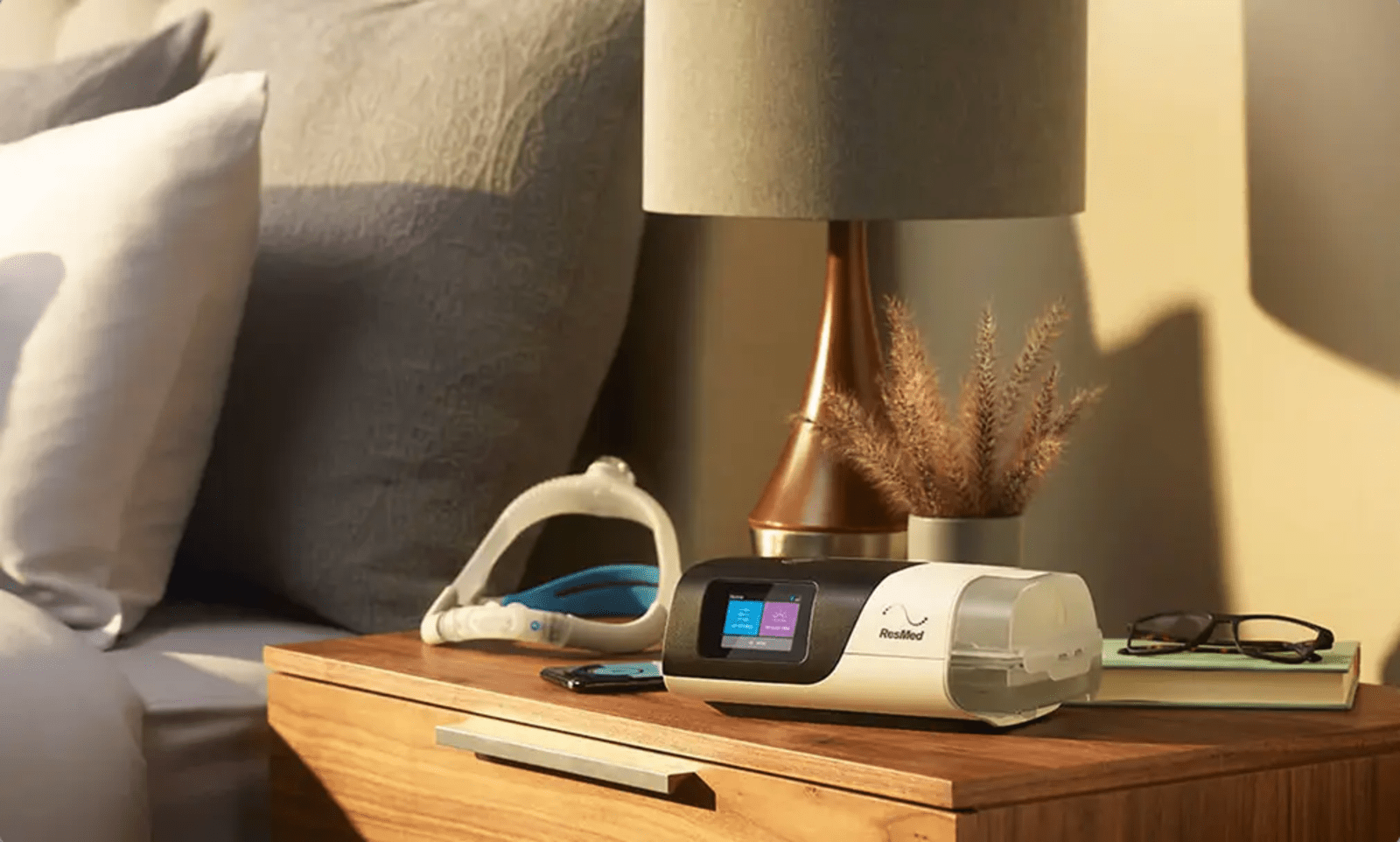
CPAP Machines
Whether you are just starting out with CPAP or have been using CPAP for years, Sove CPAP Clinic is here to support you. Browse an extensive range of CPAP machines, masks, and accessories from trusted brands including ResMed, Philips, and Fisher & Paykel. With our lowest price guarantee and flexible payment plans, achieving better sleep is easier and more affordable than ever.


CPAP Machines
 Add any mask for $100

 $50 off with "BETTERSLEEP50"

 $50 off with "BETTERSLEEP50"
 Add any mask for $100

 $50 off with "BETTERSLEEP50"


A CPAP machine is primarily used to treat obstructive sleep apnoea (OSA), a condition in which breathing repeatedly stops and starts during sleep. Left untreated, OSA can result in poor sleep quality, persistent daytime fatigue, and a range of longer-term health complications. Other forms of sleep-disordered breathing, such as central sleep apnoea (CSA) and certain respiratory conditions, cannot be managed with a CPAP machine and will require more targeted and specialised therapeutic approaches.
There are three main categories of CPAP machines currently available.
Fixed pressure CPAP delivers a constant, pre-set level of air pressure throughout the night. It is a straightforward and reliable option for people whose pressure requirements are consistent and unlikely to fluctuate. It works well for those who already know the exact pressure needed to keep their airway clear and stable.
Automatic PAP (APAP) continuously monitors your breathing and modifies the delivered pressure accordingly. If the device detects that your airway is beginning to narrow, it increases the pressure. Once breathing stabilises, it reduces it again. This makes APAP a more adaptable and comfortable CPAP machine for individuals whose pressure needs shift throughout the night.
Bilevel or Variable PAP (BiPAP/VPAP) uses two distinct pressure levels, one for breathing in and a lower one for breathing out. This can be particularly helpful for people who find it uncomfortable to exhale against a continuous fixed pressure. BiPAP machines are most commonly recommended for those with more complex or atypical breathing conditions.
A CPAP machine is made up of several interconnected parts that work together to support comfortable, unobstructed breathing during sleep. The main unit generates a continuous flow of pressurised air designed to keep the airway open throughout the night. This air is delivered through a flexible tube that connects the CPAP machine to your mask, which then directs the airflow to your nose, mouth, or both, depending on the style of mask you use.
Mask leaks occur when air escapes from around the seal, often producing a noticeable hissing sound. In most cases they are preventable with the right fit, care, and maintenance.
Start by ensuring your mask is correctly sized and fitted according to the manufacturer's instructions. A properly fitting mask should feel snug and secure without being uncomfortably tight. If you are unsure about sizing, a CPAP consultant can guide you through the fitting process.
The style of mask you choose also plays a role. Full-face masks are generally better suited to mouth breathers, while nasal masks and nasal pillows work well for those who breathe predominantly through the nose. Masks deteriorate over time and lose their ability to seal effectively, so replacing yours every six to twelve months is important. Regular cleaning is equally essential, as daily cleaning of the cushion or nasal pillows and a thorough weekly clean of the entire mask prevents residue build-up that can compromise the seal.
Some degree of adjustment is normal when starting out with a CPAP machine, but if discomfort is persistent, a few simple changes may help.
A mask that feels too bulky or restrictive is a common issue. Trying a different mask style often resolves this, as there are many options specifically designed with comfort in mind.
Specialised CPAP pillows with cut-outs to accommodate your mask and tubing can also help by reducing facial pressure and improving your sleeping position during the night.
If discomfort continues despite these adjustments, it is best to consult your CPAP consultant or doctor for further guidance.
Yes. If you are thinking about CPAP but not ready to commit, our 4-week trial lets you experience therapy at home before deciding if it's right for you. For $200 to $400, you get a complete setup, including a premium automatic or Bilevel machine, a properly fitted mask, and expert support, with help tailoring the equipment, guidance through setup, and regular check ins.
A trial is a great option whether you have just been diagnosed with sleep apnea and want to try CPAP before buying, are new to CPAP and unsure which machine or mask suits you, are a snorer or have apnea symptoms and want a short term test, or already use an older machine and want to sample newer technology. It is a low cost, no pressure way to find out what works for your sleep health.
The package includes everything needed to get started comfortably: the machine with humidifier, heated tubing, power supply, filters, and a carry bag, plus a mask and mask fitting. If anything needs replacing during the trial, or you want to try a different mask or machine model, this can usually be arranged depending on availability, so you end up with the best possible setup. A CPAP consultant or respiratory and sleep specialist will guide you through selecting the right machine type for your needs, generally starting with an automatic (AutoSet) model unless a Bilevel is more suitable.
If you would prefer a straightforward rental rather than the full trial package, that is also available at $100 for 4 weeks. More details are at thecpapclinic.com.au/cpap-trials-and-rentals.
Pricing depends on the specific model and mask combination, and changes regularly with promotions, so the most accurate figures are on the relevant product page or by calling a CPAP Consultant on 1300 76 29 39. Current prices can be checked at thecpapclinic.com.au/cpap-machine.
If you are still waking up feeling excessively tired, noticing frequent mask leaks, finding it difficult to exhale comfortably, or receiving feedback about ongoing loud snoring, your CPAP machine settings may not be well suited to your needs.
In this situation, consulting your sleep physician or CPAP consultant is the recommended course of action. Pressure adjustments to your CPAP machine should always be carried out under professional supervision to ensure treatment remains both safe and effective.
Yes. Sove CPAP Clinic has a dedicated team of sleep physicians, CPAP consultants, and respiratory specialists available to assist with a wide range of CPAP machine troubleshooting needs. Whether you would prefer a face-to-face appointment at one of our clinic locations or the convenience of a telehealth consultation, our team is committed to ensuring your CPAP machine therapy runs as smoothly and effectively as possible.
Different components of your CPAP machine have different lifespans and will need replacing at varying intervals. Masks and cushions generally require replacement every six to twelve months, while air filters should be changed at least every two months, or more frequently in dustier environments.
How often you use your CPAP machine and the conditions in which it operates will also influence how quickly parts wear out. Following the replacement guidelines provided by the manufacturer will help ensure your equipment continues to function safely and effectively.
Many CPAP machines connect with dedicated therapy tracking apps, such as ResMed's myAir, Philips' DreamMapper, and Fisher and Paykel's SleepStyle app, which allow you to keep an eye on your nightly usage and therapy data. Regular consultations with your sleep physician or CPAP consultant, however, provide a more thorough and clinically informed assessment of how well your CPAP machine treatment is progressing.
Sove CPAP Clinic also offers bulk-billed sleep studies to help evaluate the ongoing effectiveness of your therapy.
Yes, but only under the guidance and supervision of your treating doctor. A CPAP machine can be particularly beneficial for expectant mothers managing conditions such as preeclampsia, which involves elevated blood pressure during pregnancy. When recommended by a doctor, a CPAP machine is considered safe to use and may also contribute to improved sleep quality throughout the course of the pregnancy.
Modern CPAP machines are engineered to operate very quietly and should not interfere with your sleep or that of your bed partner. If your CPAP machine begins producing more noise than usual, checking the air filter is a good first step, as a blocked or dirty filter is a common cause of increased noise and can often be resolved with a straightforward clean or replacement.
While a single missed night is unlikely to cause lasting harm, you may notice the effects the following day in the form of fatigue, grogginess, or headaches similar to those you experienced before starting your CPAP machine.
A CPAP machine is a long-term treatment aimed at restoring and maintaining your sleep health, and consistent nightly use is essential to achieving its full benefits. If you are considering stopping therapy altogether, always speak with your doctor before doing so.
The signs that your CPAP machine is working become apparent over time as you begin waking up feeling more refreshed, experiencing fewer morning headaches, snoring less frequently, and sleeping through the night with fewer disruptions. Many people also notice improvements in concentration, mood, and general wellbeing as treatment takes effect.
If you are uncertain about your progress, your CPAP consultant or doctor can review your CPAP machine data and make any necessary adjustments to your settings.
Your treating doctor will assess whether a CPAP machine is appropriate for your condition, and a CPAP consultant can then help identify the most suitable device and mask based on your individual breathing patterns and comfort preferences.
Sove CPAP Clinic offers CPAP machine trials and a thirty-day money-back guarantee on selected products, giving you the flexibility to explore your options and find what works best for your needs.
At Sove CPAP Clinic, there are several ways to purchase a CPAP machine depending on your financial situation and preferences. You can buy a CPAP machine outright and benefit from our Lowest Price Guarantee, or choose an interest-free payment plan structured to suit your budget and make accessing a CPAP machine more immediately affordable.
A formal prescription is not legally required to purchase a CPAP machine in Australia, but consulting a doctor or CPAP specialist before starting is strongly recommended. A sleep study and professional assessment will confirm that your CPAP machine settings are appropriately configured for your condition, giving you the best possible chance of effective and safe treatment from the outset.
Several factors influence which mask will work best with your CPAP machine, including how you breathe, your comfort preferences, and your daily habits. Mouth breathers often find that a full-face mask provides the best seal and coverage. Those with sensitive skin or facial hair may find certain mask designs more comfortable than others. If you like to read or watch television before falling asleep, a compact mask with a wider field of vision may be the most practical choice for your routine.
Yes. CPAP masks are available in three main styles, full-face, nasal, and nasal pillow, each offered in a range of sizes to accommodate different facial structures and shapes. Trusted brands including ResMed, Philips, and Fisher and Paykel produce a wide variety of options across all styles. A CPAP consultant can assess your individual requirements and help you identify the most appropriate mask for your CPAP machine and face shape.
Getting used to a CPAP machine can take some time, and many new users experience what is commonly referred to as the J-curve effect, where things may feel harder before they begin to improve. The length of the adjustment period varies from person to person, but there are several factors that can help make the transition smoother.
These include ensuring your CPAP machine is set to a comfortable and appropriate pressure level, selecting a well-fitted mask, and committing to using your device consistently every night. Building an understanding of the long-term health benefits of using a CPAP machine can also be a helpful source of motivation during the adjustment period.
Patient support is central to everything we do at Sove CPAP Clinic. We offer in-person consultations at our clinic locations as well as telehealth appointments for those who prefer to connect remotely via video call. Our team is also reachable by phone, email, and through our around-the-clock live chat service for any questions or assistance you may need between appointments.
Most CPAP machines come with a built-in humidifier, which adds moisture to the pressurised air before it reaches your airways, making the overall experience considerably more comfortable.
Without humidification, the continuous airflow from a CPAP machine can dry out the nose, mouth, and throat, leading to irritation, congestion, and in some cases nosebleeds. A humidifier helps to minimise these effects, making breathing more comfortable and your CPAP machine easier to tolerate. This is particularly valuable for people who suffer from allergies, frequent colds, or other respiratory conditions.
No. The pressure settings on a CPAP machine should always be modified under the supervision of a qualified doctor or CPAP consultant. These settings are carefully determined based on the results of your sleep study, your medical history, and the severity of your sleep apnoea.
If you are using an automatic CPAP machine (APAP), the device will self-adjust pressure within a clinician-prescribed range based on your breathing patterns. Even so, regular check-ins with your doctor or CPAP consultant remain important to ensure your CPAP machine is performing optimally. Making unsupervised changes to your pressure settings can reduce effectiveness, cause discomfort, or in some circumstances present health risks.
To effectively manage sleep apnoea and reduce the associated health risks, you should use your CPAP machine every single night. Consistency is the single most important factor in getting the full long-term benefits of CPAP machine therapy.
While a CPAP machine is a highly effective treatment, some people experience mild side effects when first starting out. The good news is that most of these can be managed with small adjustments. Over time, most people find that the benefits of using a CPAP machine far outweigh the initial adjustment period.
Common side effects include:
Tiredness – If your mask is not fitting properly, air leaks can cause noise and disrupt your sleep. Adjusting to a CPAP machine can also take time.
Difficulty falling asleep – Getting used to the mask and air pressure from your CPAP machine may take a little while.
Mask discomfort – This can occur if the mask is too tight, pressure settings are too high, or the mask is not the right fit for your face.
Skin irritation – Overly tight mask straps or sensitivity to mask materials may cause redness or pressure marks.
Nasal congestion or dryness – Common when the humidifier on your CPAP machine is not in use or is set too low.
Bloating or gas – Some people swallow air when using higher pressure settings, which can cause bloating or abdominal discomfort.
Dry mouth or excessive saliva – This may occur if pressure settings are too high or if your mouth opens during sleep.
Sore or red eyes – Air leaking from a poorly sealed mask may cause eye irritation overnight.
Allergic reactions – Some people have sensitivities to certain mask materials, though hypoallergenic options are readily available.
If you experience any of these issues, speak with your CPAP consultant or doctor. Small adjustments such as changing the mask type, modifying settings, or enabling the humidifier on your CPAP machine can make a significant difference.
Yes. There are lightweight, compact CPAP machines designed specifically for travel, offering smaller form factors along with battery pack compatibility, multiple power source options, and travel-friendly carry cases.
A particularly popular travel CPAP machine is the ResMed AirMini, widely recognised for its compact size and convenience on the road.
No, Medicare does not cover the cost of a CPAP machine in Australia. However, some private health insurance plans may offer partial or full coverage toward a CPAP machine, depending on the specifics of your policy.
Coverage for a CPAP machine varies depending on your health insurance provider and the level of policy you hold. Contacting your insurer directly is the most reliable way to find out whether a CPAP machine is included in your extras cover and what benefit amount may apply.
Yes, CPAP machines and accessories can be purchased online, but there are a few important factors to consider before proceeding. Buying from an accredited provider is essential to ensure you receive a genuine CPAP machine backed by a valid manufacturer warranty. Some online retailers stock only a single brand, so selecting a provider that carries multiple options gives you a better chance of finding a CPAP machine that truly suits your needs. Compatibility is also worth checking, as while most masks and machines are interchangeable, certain models are only compatible with specific accessories.
Selecting the right provider is just as important as choosing the right CPAP machine. When evaluating your options, consider whether the provider is accredited and sources their products locally.
It is also worth assessing the level of clinical support on offer, including access to sleep specialists or CPAP consultants, and whether ongoing remote support is available when needed.
Other important considerations include the provider's warranty and returns policies, their experience in the industry, and whether they offer flexible payment plans or rental options for their CPAP machines. Some providers, including Sove, also offer a lowest price guarantee, which can help you secure the best available deal.
Among the most trusted and highly regarded CPAP machine brands available are ResMed, Philips, Fisher and Paykel, Transcend, and Lowenstein. At Sove CPAP Clinic, only these established brands are stocked, as each meets stringent criteria across effectiveness, comfort, noise level, ease of use, and long-term durability.
Before purchasing a CPAP machine, consider the following features:
Built-in humidifier – Helps manage dryness and airway irritation during use.
Noise level – A quieter CPAP machine is less likely to disrupt your sleep or your partner's.
Ease of use – Intuitive controls and straightforward menus make nightly use simpler.
Size and portability – An important consideration if you travel frequently and need a CPAP machine on the go.
Data tracking and connectivity – Many CPAP machines sync with apps for convenient therapy monitoring.
Reliability and warranty – A longer warranty period can be a useful indicator of overall build quality and durability.
CPAP machine – Delivers a single, fixed level of continuous air pressure throughout the night.
APAP machine – Automatically adjusts air pressure in real time based on your breathing patterns.
BiPAP machine – Provides two separate pressure levels, one for inhalation and a lower one for exhalation, making it useful for those who find a standard CPAP machine difficult to breathe against.
Keeping your CPAP machine performing well requires consistent cleaning and upkeep. The tubing and humidifier chamber should be washed weekly using mild soap and warm water. Air filters should be replaced when visibly dirty or at a minimum every two months to protect the motor and maintain accurate pressure delivery.
It is equally important to clean your mask daily to remove skin oils and residue. Most manufacturers recommend replacing mask headgear and cushions every three to six months to maintain a reliable fit and prevent air leaks from your CPAP machine.
While it is legally possible to purchase a CPAP machine in Australia without a prescription, a sleep study under the supervision of a doctor or health professional is strongly recommended before doing so. A sleep study confirms whether a CPAP machine is genuinely the appropriate treatment for your condition, and a prescription ensures the device is configured to the correct pressure for your needs. Without this, there is a real risk of using a CPAP machine that is ineffective or unsuitable for your situation.
During a sleep study, you will be monitored overnight using specialised equipment that tracks your breathing, oxygen levels, body movements, and sleep patterns. Following the study, a consultation with a healthcare professional will typically cover your symptoms, a review of the results, and if appropriate, a fitting for a CPAP mask to use with your new CPAP machine.
Adjusting to a CPAP machine takes time and patience, much like any new health routine worth committing to. A practical starting point is to wear your mask and run your CPAP machine for short periods during the day, helping you become familiar with the equipment and the sensation of pressurised airflow before using it through the night.
It is not uncommon for new CPAP machine users to experience the J-curve effect, where things feel harder before they improve. This is why remaining under the care and guidance of your doctor or health professional throughout the adjustment process is so important.
Yes, all CPAP machines sold through Sove CPAP Clinic are backed by a manufacturer's warranty, typically ranging from two to five years. The warranty generally covers defects in materials and workmanship but may not extend to damage resulting from misuse or inadequate maintenance of the CPAP machine.
If you need to lodge a warranty claim or have questions about your coverage, our team is happy to assist and can manage the process directly with the manufacturer on your behalf.
You can purchase a CPAP machine from Sove CPAP Clinic anywhere in Australia through our online store, with nationwide shipping available. If you would prefer to visit us in person, we have retail locations and clinics across most states and major cities, including Sydney, Melbourne, Brisbane, Adelaide, Perth, and Canberra. Sove CPAP Clinic has more locations in New South Wales than anywhere else, so expert support is never far away. Our network also extends across regional areas of Victoria, Queensland, South Australia, and Tasmania, making it straightforward to access a CPAP machine and professional care whether you are based in a major city or a smaller regional community.
Repairs are carried out by the manufacturers. If you are an existing customer of ours, we can assist you in organising a repair.
This depends on the specific package you choose. Some bundles, particularly through our payment plans and "Configure Package" options, include a mask alongside the machine, while standalone machines can also be purchased without one. If you'd prefer to choose your mask separately, that's completely fine too, since CPAP machines from ResMed and other major brands are generally compatible with masks from multiple brands.
The AirSense 11 is the newer generation, and it's noticeably more compact and lightweight than the AirSense 10, around 24% smaller and 10% lighter. It also has a sleeker touchscreen interface and improved 4G cellular connectivity for remote monitoring and over-the-air updates. Functionally, the AirSense 11 AutoSet combines both the standard AutoSet and AutoSet for Her algorithms into one device, where previously these required two separate AirSense 10 units. Both ranges include Elite (fixed pressure) and AutoSet (automatic) models with integrated humidifiers.
No, but it’s strongly recommended to consult a doctor or CPAP specialist before starting therapy. A sleep study and professional guidance will help ensure your machine settings are correctly adjusted for the most effective treatment.
Several CPAP machines are compatible with 12V car chargers or DC systems when used with the appropriate converter kits or adapters. For example, the ResMed AirSense 10 series can be used with a 24/12V DC/DC Converter Kit, and the Transcend series has a mobile adapter kit available for 12V use.
Additionally, the Philips DreamStation Auto and Pro, Philips Respironics System One S60, and DeVilbiss IntelliPAP I and II (with a compatible cord) can be powered using the Medistrom Pilot-12 Lite battery, which can be charged via a 12V car charger. For more details and to view all compatible options, please visit the “Batteries and Power” section on our website:
Please see our website’s “Batteries and Power” section for available 12V converter kits:
< a href="https://www.thecpapclinic.com.au/batteries-and-power" target="_blank">Batteries and Power</a>
Yes. Our Freedom Payment Plans are designed to make CPAP treatment more accessible and flexible, starting from just $25 per fortnight over 3 years with only $1 required upfront and no large out of pocket costs or interest, approved through a simple credit check over the phone or in person. You're free to pay off the plan faster at any time without penalty.
The plans let you mix and match premium brands like ResMed, Philips, and Fisher & Paykel, since different brands suit different face shapes and breathing patterns, with your healthcare practitioner helping select the right equipment mix for you. Subscribers are also future proofed against price rises, with the option to select the latest, most suitable masks each year at no extra cost.
Premium subscribers are covered under the 360 Care Plan, which includes a bi-annual respiratory or sleep specialist review, bulk billed sleep study access, unlimited CPAP Consultant reviews, CPAP data report access, complimentary accessories, an extra 10% off already discounted accessory prices, and a complimentary loan machine if yours breaks down. This level of support reflects the fact that around 25% of patients discontinue CPAP treatment within the first 12 months, and up to 83% become non-compliant over the long term, with more intensive, regular follow up care shown to improve outcomes like nightly usage, daytime sleepiness, and hospitalisation rates. Full terms and conditions apply.
If you have recently been diagnosed with obstructive sleep apnoea and are trying to figure out the cost of treatment, searching for a cheap CPAP machine is one of the most common first steps. It is a completely reasonable place to start, and the reality is that affordable options do exist, but finding genuine value requires a little more consideration than simply locating the lowest price available.
The cost of a cheap CPAP machine in Australia depends on several factors, including the type of device, the brand, and where you choose to buy it. Fixed-pressure CPAP machines are generally the most affordable entry point, while Auto CPAP and Bi-Level devices tend to sit at a higher price due to their additional technology and functionality. When most people search for a cheap CPAP machine, they are focused on the upfront purchase price, but it is worth remembering that the ongoing cost of masks, tubing, filters, and humidifier chambers also adds up over time. Understanding the full picture of what therapy costs, not just the device itself, will help you budget more accurately from the outset.
It is also worth asking whether buying the cheapest CPAP machine available is always the right decision. A device that does not suit your prescription, your breathing patterns, or your comfort needs may ultimately cost you more through additional clinic visits, replacement equipment, or poor therapy outcomes that affect your health and quality of life. Affordable and low quality are not the same thing, however, and with the right guidance it is entirely possible to find a cheap CPAP machine that is also clinically effective and comfortable to use night after night.
One of the best places to find a cheap CPAP machine is through a dedicated CPAP clinic such as Sove CPAP Clinic. Specialist providers typically offer competitive pricing alongside clinical expertise, setup support, and ongoing care. Many reputable clinics also offer a lowest price guarantee, meaning that if you find the same machine cheaper elsewhere, they will match it. This gives you confidence that you are not overpaying without having to sacrifice the professional support that makes a real difference to your therapy outcomes.
Payment plans are another highly practical way to access a cheap CPAP machine without compromising on the quality of the device you choose. Rather than paying the full purchase price upfront, Sove CPAP clinic offers flexible arrangements that allow you to begin therapy for as little as one dollar on the day, with the remaining cost spread across affordable fortnightly payments. This approach makes it possible to access a cheap CPAP machine from a trusted brand such as ResMed, Philips, or Fisher and Paykel without a significant financial outlay from day one, which is particularly helpful for those who are newly diagnosed and still finding their feet with treatment costs.
When searching for a cheap CPAP machine, one avenue to approach with caution is online marketplaces and second-hand listings. While the prices on these platforms can appear very attractive, the risks are significant. Second-hand machines may have high usage hours, may not be safe from a hygiene perspective, and are unlikely to come with any warranty or access to clinical support. Unverified devices also raise legitimate safety concerns that make the apparent saving far less appealing on closer inspection.
Ultimately, the best cheap CPAP machine is not simply the one with the lowest price tag. It is the one that is clinically appropriate for your needs, comfortable enough that you will use it every night, supported by a warranty, and backed by knowledgeable staff who can help you troubleshoot issues and optimise your therapy over time. Consistent nightly use is what delivers the genuine health benefits of CPAP treatment, and a machine you actually wear represents far greater value than one that sits unused because it was never quite right for you. Speaking with a qualified CPAP consultant at Sove CPAP Clinic is always the most reliable starting point for finding a cheap CPAP machine that truly works.
If you have recently been diagnosed with obstructive sleep apnoea, or if your current equipment is due for an upgrade, knowing where to find a CPAP machine for sale is an important first step. The good news is that there are more purchasing options available in Australia today than ever before, but not all of them offer the same level of quality, safety, or support. Understanding what to look for when searching for a CPAP machine for sale can make a significant difference to both your therapy outcomes and your overall experience.
The most reliable place to find a CPAP machine for sale is through a dedicated CPAP clinic or specialist sleep therapy provider. Purchasing a CPAP machine for sale through a specialist provider also typically includes setup assistance, ongoing support, and access to follow-up care, all of which play a meaningful role in the success of your therapy over time.
Online retailers represent another avenue for finding a CPAP machine for sale, and in some cases can offer competitive pricing. The key consideration here is whether the retailer is a legitimate, accredited provider operating within Australian regulatory standards. Purchasing a CPAP machine for sale from a reputable online CPAP specialist can be a perfectly valid option, provided you have a clear understanding of the device you need, and access to support if issues arise after purchase. Where online purchasing becomes risky is through unverified marketplaces or overseas websites that may sell devices not approved for use in Australia, offer no warranty, and provide no clinical support whatsoever.
Second-hand listings are another place where people commonly search for a CPAP machine for sale, particularly on platforms such as Facebook Marketplace or Gumtree. While the prices can seem appealing, buying second-hand CPAP equipment carries real risks. Machines purchased this way may have accumulated thousands of hours of use, may have internal components that are worn or compromised, and cannot be verified as hygienic or safe. A second-hand CPAP machine for sale through an unverified private seller also comes with no warranty and no guarantee that the device is functioning accurately, which can directly affect the quality and safety of your therapy.
Private health insurance and government subsidy schemes are worth investigating before you begin searching for a CPAP machine for sale, as financial assistance may reduce what you need to pay out of pocket considerably. Depending on your insurer and level of cover, a benefit toward CPAP equipment may already be included in your policy. Some Australian states also operate subsidy programs for eligible patients, so speaking with your sleep specialist about what assistance may be available to you is a sensible early step.
Payment plans have become an increasingly popular way to access a CPAP machine for sale without the burden of a large upfront cost. Sove CPAP clinic now offers flexible arrangements that allow you to begin therapy for as little as one dollar on the day, with the balance spread across manageable fortnightly payments. This makes finding a quality CPAP machine for sale far more accessible for those who may not be in a position to pay the full purchase price immediately, without requiring any compromise on the quality or clinical suitability of the device.
When evaluating any CPAP machine for sale, the most important factors to consider are whether the device is appropriate for your prescription, whether it is covered by a manufacturer warranty, and whether the seller can provide genuine clinical support before and after purchase. The lowest price is rarely the most important consideration when it comes to a medical device you will rely on every night. Finding a CPAP machine for sale through a trusted, accredited provider remains the most reliable way to ensure your therapy is safe, effective, and properly supported from day one.